


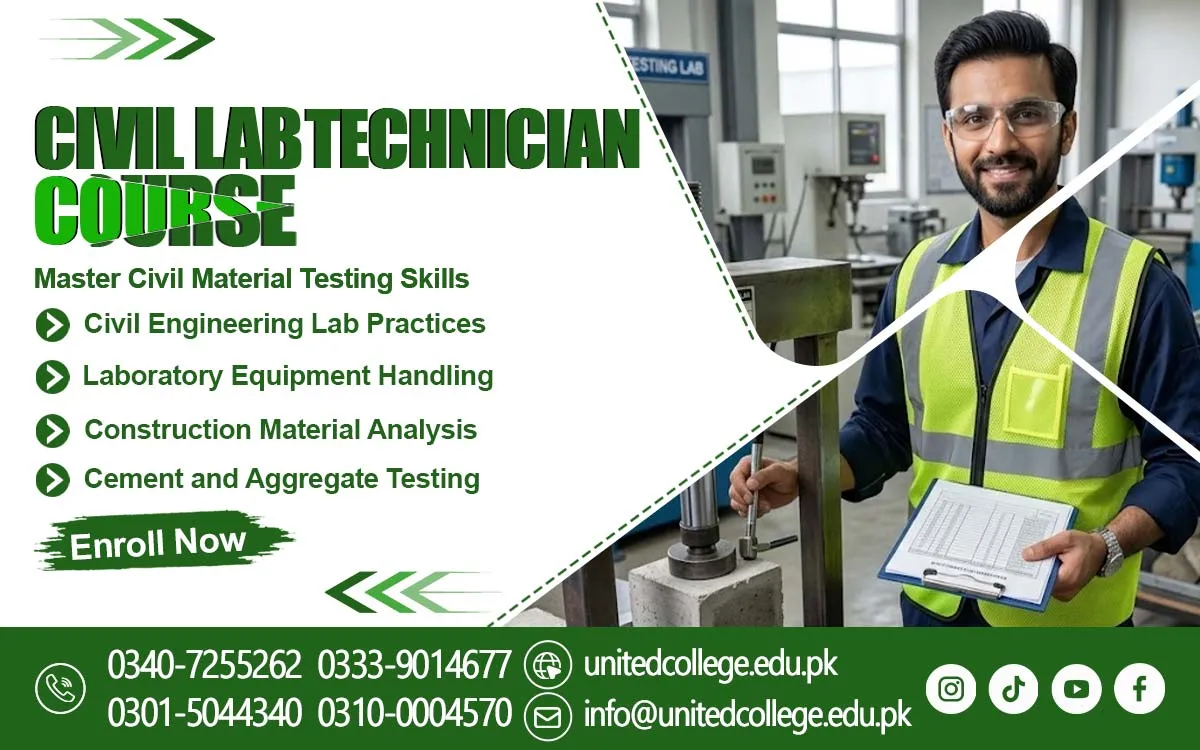

Civil Lab Technician Course in Upper Dir for Building Material Evaluation
Fundamentals of Building Material Investigation
Building material investigation is an important part of civil engineering because it helps determine the quality, strength, and suitability of materials used in construction projects. Students enrolling in the Civil Lab Technician Course in Upper Dir learn about the basic principles of examining construction materials such as cement, concrete, soil, sand, bricks, steel, and aggregates. They understand how material investigation supports the development of safe and durable buildings, roads, and other infrastructure.
During this section, learners explore different methods used to inspect and evaluate construction materials. They become familiar with sample collection, physical examination, basic testing procedures, and material measurements. Students also understand why construction materials must be checked before being used in different engineering applications.
The course introduces learners to the responsibilities of laboratory technicians during material investigation. They develop an understanding of testing accuracy, proper sample handling, and systematic observation. This knowledge provides a foundation for further learning in construction material testing and quality assessment.
Understanding Soil Testing Instruments
Soil testing instruments are essential tools used to examine the physical properties and condition of soil samples. Students learn about commonly used laboratory equipment and understand how these instruments help evaluate soil characteristics for construction purposes. They become familiar with weighing balances, moisture content containers, sieves, measuring cylinders, and density testing equipment.
The Civil Lab Technician Course in Upper Dir introduces learners to the basic functions and operating procedures of soil testing instruments. They explore how equipment is prepared, how samples are tested, and how measurements are collected during laboratory activities. Students also learn why correct instrument handling is necessary to obtain reliable results.
Proper use of soil testing equipment helps technicians examine soil properties more accurately. Learners understand the importance of equipment cleanliness, calibration, and careful measurement practices. These abilities help them develop confidence in performing basic soil laboratory activities.
Exploring Cement and Mortar Analysis
Cement and mortar are important materials used in different construction activities. Students learn about the basic composition and properties of cement and understand how it works as a binding material. They also explore mortar, which is commonly prepared by combining cement, sand, and water for brickwork, plastering, and other construction applications.
During this section, learners become familiar with different examination procedures used for cement and mortar. They explore cement fineness, consistency, setting time, and basic mortar strength evaluation. Students also understand how laboratory samples are prepared and why proper proportions are important when examining these materials.
Understanding cement and mortar analysis helps learners recognize the importance of material quality in construction work. They learn how laboratory testing provides useful information about material performance and suitability. This knowledge prepares them to assist with basic construction material inspection.
Learning Concrete Mix Evaluation
Concrete mix evaluation is an important process used to understand the quality and performance of concrete mixtures. Students learn about the main ingredients of concrete, including cement, water, fine aggregates, and coarse aggregates. They explore how the quantity and properties of these materials influence the strength, workability, and durability of concrete.
The Civil Lab Technician course introduces learners to basic concrete mix evaluation procedures. They become familiar with material proportioning, sample preparation, mixing techniques, and slump testing. Students also understand how concrete specimens are prepared and examined to evaluate their performance under different testing conditions.
Learners develop an understanding of why suitable concrete proportions are necessary for construction projects. They explore how laboratory observations and testing results help engineers assess concrete quality. This knowledge provides a foundation for understanding concrete inspection and quality control.
Examining Aggregate Water Absorption
Water absorption is an important property used to evaluate the characteristics and quality of construction aggregates. Students learn about fine and coarse aggregates and understand how their physical structure influences the amount of water they can absorb. They explore common materials such as sand, gravel, and crushed stone used in concrete and other construction applications.
During this section, learners become familiar with the basic water absorption testing procedure. They understand how aggregate samples are cleaned, soaked, dried, and weighed to determine their water absorption characteristics. Students also learn about the importance of accurate measurements and suitable sample preparation during laboratory testing.
Understanding aggregate water absorption helps students recognize how aggregates can influence the water requirements and performance of concrete mixtures. They learn why this property is considered during material selection and concrete mix evaluation. This knowledge helps them develop practical understanding of aggregate quality assessment.
Understanding Laboratory Test Calculations
Laboratory calculations are necessary for analyzing measurements and evaluating construction material properties. Students learn about the mathematical operations commonly used in civil engineering laboratories. They understand how weights, volumes, percentages, ratios, and other numerical values are applied during different testing activities.
The Civil Lab Technician Course in Upper Dir introduces learners to calculations related to soil moisture content, density, aggregate water absorption, material proportions, and concrete testing. They explore how measurements are collected and used in basic testing formulas. Students also develop an understanding of arranging numerical information in an organized format.
Accurate calculations help technicians prepare dependable laboratory results and avoid unnecessary errors. Students learn the importance of checking measurements and presenting calculations clearly in testing records. These abilities support their technical development and improve their confidence in laboratory work.
Developing Accurate Inspection Reports
Inspection reports are important documents in civil engineering laboratories because they provide written information about material examination and testing activities. Students learn how laboratory observations, measurements, and results are recorded in a clear and organized manner. They understand why accurate documentation is necessary for construction quality assessment.
During this section, learners explore the basic structure of material inspection reports. They become familiar with recording sample details, mentioning testing procedures, organizing numerical results, and preparing technical summaries. Students also learn how to maintain organized laboratory records and avoid mistakes when documenting information.
Accurate inspection reports help engineers and construction professionals review material quality and make informed decisions. Students understand the importance of clear communication and proper record management in professional laboratory environments. These abilities prepare them for documentation responsibilities in civil engineering organizations.
Career Options in Civil Engineering Laboratories
Civil engineering laboratories offer different employment opportunities in the construction, infrastructure, and engineering sectors. Individuals completing the Civil Lab Technician Course in Upper Dir can explore professional positions according to their technical knowledge, practical abilities, and experience. These opportunities may be available in material testing laboratories, construction companies, engineering consultancies, and infrastructure development projects.
Some possible career positions include Civil Lab Technician, Soil Testing Assistant, Material Testing Assistant, Concrete Testing Technician, Quality Control Assistant, and Laboratory Documentation Assistant. A Civil Lab Technician performs basic examinations of construction materials, while a Soil Testing Assistant supports soil sampling and laboratory testing. Material Testing Assistants help inspect construction materials, whereas Concrete Testing Technicians assist with concrete mix evaluation and strength examinations. Quality Control Assistants help monitor material standards and maintain inspection records.
With practical experience and further technical education, individuals can improve their understanding of laboratory procedures and construction material analysis. Developing equipment-handling abilities, accurate calculations, inspection techniques, and report preparation skills can help learners explore additional professional opportunities in the civil engineering industry.
Frequently Asked Questions (FAQs)
The Civil Lab Technician Course in Upper Dir provides knowledge of building material investigation, soil testing, cement and mortar analysis, concrete mix evaluation, and laboratory inspection procedures.
Students learn soil testing instruments, aggregate water absorption, concrete mix evaluation, laboratory calculations, material inspection, and technical report preparation.
Common materials include cement, concrete, soil, sand, bricks, steel, mortar, gravel, and different types of construction aggregates.
This test determines how much water aggregates absorb and helps evaluate their physical properties for concrete production and other construction applications.
Cement and mortar analysis helps examine material properties, setting behavior, consistency, and strength to assess their suitability for construction work.
Admission Open: Start Your Professional Journey Today!
Join United College of Technology and build a career with practical training, recognized certifications, and Gulf job support. Seats are limited.
Apply Now via WhatsAppContact Information
- Address: Rawalpindi: F-272 Main New Katarian Stop, Old IJP Road | Lahore Campus: Lahore, Pakistan
- Phone/WhatsApp: 0340-7255262 / 0333-9014677 / 0301-5044340 / 0310-0004570 / 051-8770756
- Website: unitedcollege.edu.pk
















Leave a Comment