


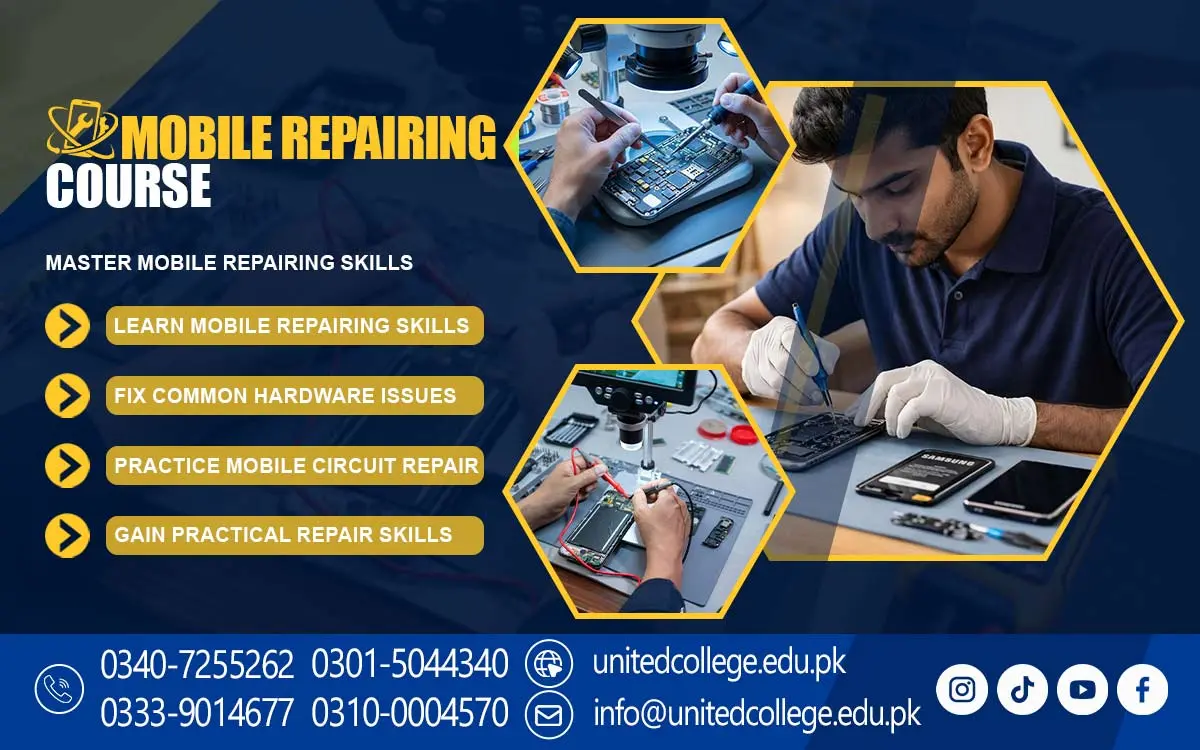

Mobile Repairing Course in Kohat: Master Modern Phone Repair Skills
Common Smartphone Problems That Require Careful Technical Attention
Smartphones can develop several faults through regular use, accidental damage, exposure to moisture, or normal component wear. A phone may have a cracked display after falling onto a hard surface, a charging problem caused by a damaged port, or a battery that loses power much faster than expected. Other common issues include weak speakers, microphones that fail during calls, malfunctioning power buttons, network connectivity problems, and devices that restart without warning. Although these symptoms may appear straightforward, their causes are not always obvious. For example, a phone that does not charge might have a faulty cable, a blocked charging port, a damaged battery, or a problem within its charging circuit.
The Mobile Repairing Course in Kohat introduces learners to the importance of recognizing these symptoms and understanding the possible reasons behind them. Beginners can learn to distinguish between visible damage and faults that require further testing. They can also develop an understanding of mobile phone diagnostics, which involves collecting information about a device's condition before deciding what to repair. For students in Kohat, learning about everyday smartphone problems provides a practical foundation for technical education. By studying common faults and their possible causes, beginners can start developing the observation skills needed to approach mobile repairs carefully rather than relying on guesswork.
Skills Beginners Can Develop Through Structured Mobile Repairing Training
Learning mobile repairing involves understanding how a smartphone works, how its components interact, and how to investigate problems safely. Beginners do not need to know every technical term before starting, but they should be willing to learn step by step. Mobile repair training can introduce learners to important phone components, including displays, batteries, speakers, microphones, cameras, charging ports, buttons, and internal connectors. Students can also begin understanding the difference between hardware and software. Hardware refers to the physical parts of a device, while software includes the operating system and applications that control its functions.
A mobile phone repair course can also introduce basic troubleshooting methods, such as checking symptoms, examining visible damage, and testing simple explanations before considering more complex repairs. The Mobile Repairing Course in Kohat is relevant to beginners who want to explore these skills through technical learning. At United College of Technology (UCT), interested learners can consider the course as part of their preparation for understanding smartphone servicing. As their knowledge develops, students can become more familiar with Android phone repair and introductory iPhone repair concepts. Different phone brands may use different designs, connectors, and repair procedures, so technicians must learn to consult suitable technical information rather than assume that every device is identical.
Finding the Real Cause of Hardware Damage Before Replacing Parts
One of the most important habits in mobile hardware repair is identifying the actual cause of a problem before removing or replacing any component. A smartphone may show a black screen even when the device is still running, or it may vibrate without displaying anything. These symptoms can indicate different problems, including display damage, connector issues, battery faults, or other internal failures. A technician should therefore examine the phone's condition and perform appropriate checks before deciding which part needs attention. If a customer reports that a phone stopped working after being dropped, the technician may need to inspect the display, frame, connectors, and other potentially affected areas.
They can also study common repair areas, such as LCD and touchscreen replacement, speaker servicing, button faults, and charging port repair. Some phones use display assemblies in which the screen and touch layer are joined, so the correct replacement method depends on the device design. Introductory mobile motherboard repair knowledge can help students recognize that complex faults may involve circuits and tiny electronic components rather than easily replaceable parts. The Mobile Repairing Course in Kohat can be a starting point for learning these principles. Developing a careful diagnostic approach helps reduce unnecessary replacements, protects working components, and encourages more responsible repair decisions.
Understanding Software Faults and Smartphone Troubleshooting Methods
Not every smartphone problem requires opening the device. Sometimes, the cause lies in the operating system, application settings, storage limitations, or software conflicts. A phone that runs slowly may have too many background applications, insufficient free storage, or an application that is not working correctly. Unexpected restarts can also result from software errors, although hardware problems may produce similar symptoms. This is why mobile software troubleshooting is an important part of a technician's knowledge. Beginners can learn to gather information about when a fault started, whether it occurs during a particular activity, and whether the problem affects the whole device or only one application.
More advanced procedures, including operating system recovery or firmware installation, require additional care because incorrect steps can cause data loss or make a device unusable. Before performing any reset or software operation that could erase information, technicians should explain the risks and obtain the owner's informed permission. Basic iPhone repair concepts also require awareness of device-specific settings and supported recovery methods. Through learning connected to the Mobile Repairing Course in Kohat, beginners can understand why software and hardware faults must be considered separately. This knowledge helps technicians avoid unnecessary disassembly and choose sensible troubleshooting steps based on the phone's symptoms, condition, and available technical information.
Using Mobile Repairing Tools Correctly and Protecting Delicate Components
Mobile phones contain small, tightly fitted parts that careless handling can damage. Using the correct tools is therefore an important part of smartphone repair. Precision screwdrivers help remove small screws without damaging their heads, while plastic opening tools can help separate covers and components with less risk of scratching the device. Tweezers help handle small parts, and a multimeter can measure electrical values such as voltage, resistance, and continuity when used correctly. Suitable diagnostic equipment may also help technicians investigate particular faults, depending on the device and the repair being performed. However, owning tools is not enough; learners must understand how and when to use them.
A swollen or visibly damaged battery should not be pressed, bent, or treated as an ordinary component. Students should learn to follow appropriate safety procedures and seek qualified guidance when a repair involves risks beyond their experience. Organizing screws and small components during disassembly also makes reassembly easier and reduces the chance of losing parts. As part of mobile repairing training, learners should become familiar with the purpose and limitations of mobile repairing tools and equipment. For students considering the Mobile Repairing Course in Kohat, understanding safe tool handling is an essential part of developing careful working habits before attempting increasingly complex repairs.
Diagnosing Battery, Charging Port, Display, and Touchscreen Faults
Battery, charging, and display problems are among the most noticeable smartphone faults because they directly affect everyday use. A battery that drains quickly may be worn out, but heavy application use, poor network conditions, or software activity can also increase power consumption. A phone that charges intermittently might have a damaged cable, a dirty port, a faulty connector, or an internal charging problem. A technician should investigate these possibilities rather than immediately recommending a battery or charging port replacement. Display faults require similar care. A cracked outer glass surface may still allow the phone to function, whereas damage to the display assembly can cause black areas, flickering, lines, or an unresponsive touchscreen.
Learners can also study battery replacement techniques, including the importance of checking compatibility, following manufacturer guidance, and handling adhesive and connectors safely. Charging port repair may require careful disassembly and, depending on the design, specialized soldering skills that should only be attempted with suitable training and equipment. Some faults involve circuitry that cannot be corrected by replacing an external part. The Mobile Repairing Course in Kohat can introduce beginners to these common repair categories and the reasoning behind appropriate diagnosis. By learning to distinguish between battery, display, connector, and charging circuit problems, students can better understand how repair decisions are made.
Building Practical Repair Skills Through Careful, Supervised Exercises
Reading about smartphone components is useful, but technical understanding develops further when learners apply their knowledge to practical tasks. Beginners can start by identifying phone parts, learning how different screws and connectors are arranged, and studying the correct sequence for opening and reassembling a device. They can practise organizing small components, recognizing fragile flex cables, and using appropriate tools under qualified supervision. A flex cable is a thin, flexible connection that carries signals or power between parts of a phone; pulling it carelessly can cause damage that is difficult to repair.
Training should also encourage learners to check a device's condition before and after any permitted repair, while following suitable safety measures and protecting personal information. When a phone does not work as expected after reassembly, the learner should review the process methodically instead of applying force or repeatedly removing components without a clear reason. Students exploring the Mobile Repairing Course in Kohat should understand that progress depends on consistent practice, accurate guidance, and a willingness to learn from mistakes. These habits are valuable because a technician may encounter unfamiliar phone models and faults that require research, careful testing, and further technical development.
Exploring Mobile Technician Responsibilities and Realistic Career Paths
Learning mobile repair may help students explore several practical directions, but career progress depends on their skills, experience, reliability, and the opportunities available to them. A beginner may first seek to assist an experienced technician, observe repair procedures, organize components, or help with basic device inspections. With further practice and suitable supervision, a learner may become prepared to take on more routine servicing tasks. Working in a mobile repair shop can also provide opportunities to understand customer needs, common device problems, repair estimates, and the importance of explaining technical issues in clear language.
Some experienced technicians eventually consider self-employment, but running a repair service involves more than repairing phones. It may require tools, suitable workspace arrangements, reliable parts suppliers, customer service skills, careful recordkeeping, and an understanding of repair costs. A responsible technician should explain what a repair may involve, avoid promising results before proper diagnosis, and obtain permission before carrying out work that could affect stored data. Customer trust can be damaged by careless handling, unclear communication, or unnecessary replacement of components. The Mobile Repairing Course in Kohat can form one part of a learner's technical education journey, while additional practice and real-world experience help develop professional ability.
Preparing for Mobile Repairing Training in Kohat and Your Next Learning Steps
Before starting mobile repairing training, it is useful to think about what you want to learn and how you plan to use those skills. Some beginners may be interested in understanding everyday phone faults, while others may want to explore technical work as a possible career direction. You do not need to be an experienced technician to begin learning, but patience, attention to detail, and a willingness to follow instructions are important. Students in Kohat can start building familiarity with common smartphone components, basic electrical safety, and the difference between software and hardware problems.
It is also helpful to understand that different manufacturers use different designs, so repair methods should be based on the specific device rather than assumptions. Before handling a customer's phone, learners should gain appropriate practice and understand how to protect personal data, prevent accidental damage, and recognize repairs that require more advanced expertise. Anyone considering the Mobile Repairing Course in Kohat offered by United College of Technology (UCT) should review the institution's current course information and confirm relevant details directly instead of relying on assumptions about fees, duration, equipment, or admission requirements.
Frequently Asked Questions (FAQs)
The Mobile Repairing Course in Kohat is designed for learners interested in understanding smartphone faults, hardware components, software troubleshooting, and mobile repair techniques.
Students, beginners, fresh learners, and job seekers interested in technical skills can explore mobile repairing training. Contact United College of Technology (UCT) to confirm the current admission requirements.
Learners can study smartphone diagnostics, charging problems, battery faults, display issues, hardware components, and software troubleshooting, depending on the course curriculum.
Mobile repairing may cover both hardware repair and software troubleshooting. The exact topics depend on the training curriculum offered by the institution.
Yes. Beginners can start by learning smartphone components, basic diagnostic methods, tool handling, and safe repair practices before progressing to more complex tasks.
Admission Open: Start Your Professional Journey Today!
Join United College of Technology and build a career with practical training, recognized certifications, and Gulf job support. Seats are limited.
Apply Now via WhatsAppContact Information
- Address: Rawalpindi: F-272 Main New Katarian Stop, Old IJP Road | Lahore Campus: Lahore, Pakistan
- Phone/WhatsApp: 0340-7255262 / 0333-9014677 / 0301-5044340 / 0310-0004570 / 051-8770756
- Website: unitedcollege.edu.pk
















Leave a Comment