


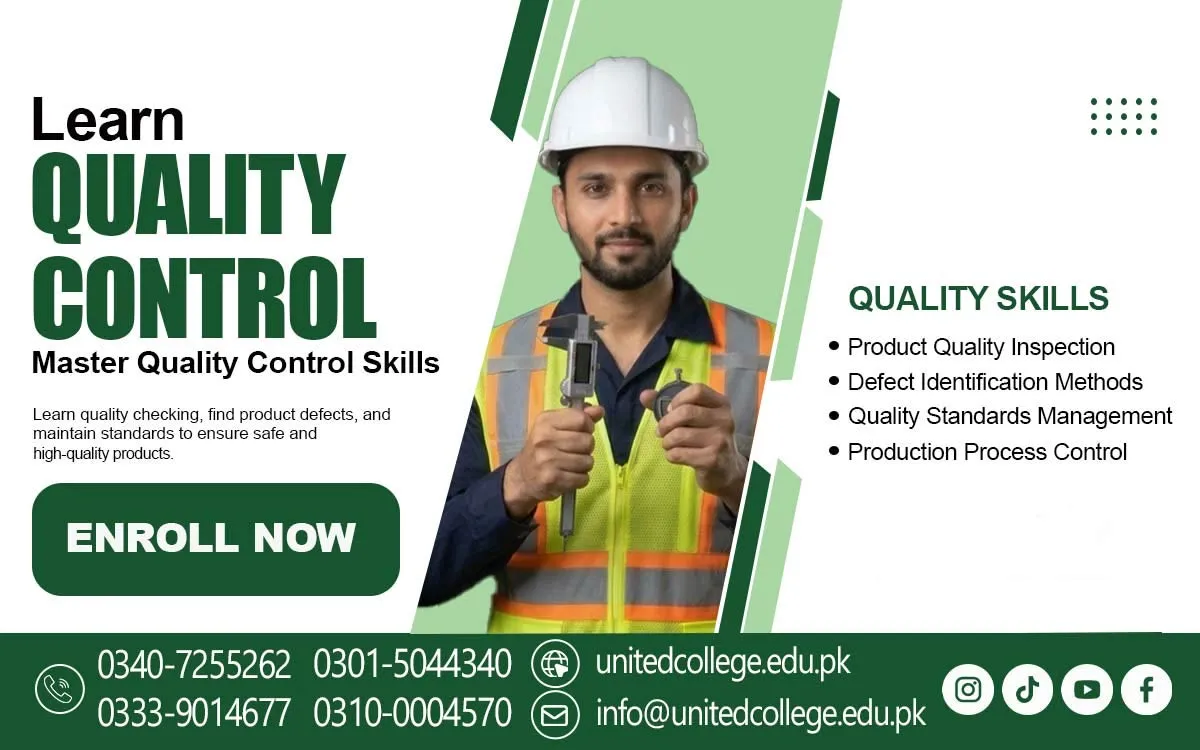

Quality Control Course in Lower Dir for Quality Management
Understanding Professional Quality Control Systems
Professional quality control systems help organizations maintain product standards and improve manufacturing performance. The Quality Control Course in Lower Dir introduces students to the basic principles of industrial quality management and explains how companies establish procedures to monitor production activities. Learners understand how quality control contributes to product reliability and customer satisfaction.
During the training, students explore different elements of quality control systems, including inspection planning, product testing, process monitoring, and quality verification. They learn how organizations establish checking procedures to ensure that materials and finished products meet specific requirements. This knowledge helps learners understand the importance of systematic quality management.
Furthermore, students discover how effective quality control systems reduce manufacturing errors and unnecessary production costs. They learn why industries regularly review their procedures and improve working methods to achieve consistent results. These concepts provide a strong foundation for individuals interested in industrial quality management.
Exploring the Process of Quality Evaluation
Quality evaluation helps organizations determine whether their products and production activities meet established standards. Students learn how quality professionals examine materials, manufacturing processes, and finished products to identify possible weaknesses. The Quality Control Course in Lower Dir introduces learners to different evaluation procedures used in industrial environments.
During this section, students become familiar with visual inspections, dimensional measurements, product comparisons, and performance assessments. They understand how actual product results are compared with technical specifications. These procedures help inspectors identify quality differences and determine whether products meet the required conditions.
The course also explains how evaluation results support better production decisions. Learners understand why regular assessments are important for maintaining product consistency and reducing defects. This knowledge helps students develop an understanding of professional quality inspection practices.
Learning Different Types of Industrial Testing
Industrial testing plays an important role in checking product performance, strength, and reliability. Through the Quality Control Course in Lower Dir, students explore different testing methods used in manufacturing and technical industries. They learn how testing helps organizations determine whether products are suitable for their intended applications.
Learners become familiar with basic testing approaches, including visual examination, dimensional testing, functional assessment, and material evaluation. They understand how different products require specific testing procedures according to their design and technical requirements. This knowledge helps students recognize the importance of selecting appropriate testing methods.
Moreover, students discover how testing results help manufacturers identify weaknesses and improve product quality. They learn why accurate testing records and proper inspection procedures are necessary for reliable results. These concepts provide useful knowledge for future industrial inspection responsibilities.
Understanding Methods of Defect Classification
Defect classification helps quality professionals identify and organize product problems according to their nature and seriousness. Students learn how manufacturing defects can affect product appearance, functionality, and performance. The Quality Control Course in Lower Dir introduces learners to common defect categories and their importance in quality inspection.
During training, students explore different types of defects, such as minor surface imperfections, dimensional errors, material weaknesses, and major functional problems. They understand how inspectors examine defective products and classify issues according to established acceptance criteria. This approach helps organizations make consistent inspection decisions.
The course also explains why accurate defect classification supports manufacturing improvements. Learners discover how defect records help businesses identify repeated problems and investigate their causes. These practices contribute to better production quality and reduced manufacturing waste.
Examining Procedures for Product Approval
Product approval is an important stage in manufacturing because it determines whether finished goods meet the required quality specifications. Students learn how organizations review inspection results and testing information before approving products for delivery. The Quality Control Course in Lower Dir introduces learners to the basic procedures involved in product verification and acceptance.
Learners explore how quality inspectors check product dimensions, finishing, functionality, and compliance with technical requirements. They understand how inspection reports and testing results support product approval decisions. This knowledge helps students recognize the responsibilities involved in final product evaluation.
Furthermore, students learn how organizations manage products that do not meet established standards. They understand why defective items may require correction, additional testing, or rejection. These procedures help maintain product reliability and customer confidence.
Understanding Quality Performance Indicators
Quality performance indicators help organizations measure the effectiveness of their production and inspection activities. Students learn how businesses use different measurements to evaluate manufacturing results and identify areas that require improvement. The Quality Control Course in Lower Dir introduces learners to basic quality performance measurement techniques.
During this section, students explore indicators such as defect rates, rejection percentages, inspection results, product returns, and production accuracy. They understand how these measurements provide useful information about manufacturing performance. This knowledge helps learners recognize how quality data supports better industrial decisions.
The training also explains why organizations monitor performance indicators regularly. Students learn how businesses compare current results with quality targets and introduce improvements when necessary. These concepts develop their understanding of quality monitoring and industrial performance management.
Maintaining Accurate Records for Inspection Activities
Inspection records are essential for documenting product evaluations, testing results, and manufacturing quality activities. Students learn how professional inspectors prepare and maintain different types of quality documents. The Quality Control Course in Lower Dir introduces learners to inspection reports, quality checklists, defect records, and testing documentation.
Learners understand how to record measurements, describe inspection findings, and communicate quality-related problems. They explore why documentation should be accurate, organized, and easy to review. These practices help organizations maintain reliable information about their production activities.
Additionally, students discover how inspection records support internal reviews, quality audits, and future improvements. They learn why proper documentation helps businesses track recurring defects and evaluate the effectiveness of corrective actions. These skills are valuable for individuals interested in quality control and industrial administration.
Exploring Employment Opportunities in Quality Control
Quality control provides career opportunities in manufacturing, construction, engineering, food processing, and other industrial sectors. After completing the Quality Control Course in Lower Dir, students can explore different professional roles according to their qualifications, technical knowledge, and practical experience.
Potential career options include Quality Control Inspector, Quality Assurance Assistant, Product Testing Technician, Manufacturing Quality Checker, and Inspection Record Assistant. Individuals who develop additional technical skills and gain workplace experience may also progress toward supervisory and quality management positions.
United College of Technology provides technical education that helps students understand important industrial concepts and develop professional knowledge. Individuals interested in quality inspection can use this training as a foundation for further learning and career development. With dedication, practical experience, and continuous improvement, learners can prepare themselves for opportunities in the industrial sector.
Frequently Asked Questions (FAQs)
The Quality Control Course in Lower Dir is a professional training program that teaches students industrial inspection, product evaluation, defect classification, quality testing, and manufacturing quality management.
Students learn professional quality control systems, industrial testing methods, product approval procedures, defect identification, quality performance indicators, and inspection documentation.
Students, fresh graduates, job seekers, and individuals interested in manufacturing, engineering, construction, and industrial inspection can apply according to the institute's admission requirements.
Common manufacturing defects include surface damage, incorrect dimensions, material weaknesses, finishing problems, and functional failures.
Product approval confirms that finished goods meet established specifications and quality requirements before they are delivered to customers.
Admission Open: Start Your Professional Journey Today!
Join United College of Technology and build a career with practical training, recognized certifications, and Gulf job support. Seats are limited.
Apply Now via WhatsAppContact Information
- Address: Rawalpindi: F-272 Main New Katarian Stop, Old IJP Road | Lahore Campus: Lahore, Pakistan
- Phone/WhatsApp: 0340-7255262 / 0333-9014677 / 0301-5044340 / 0310-0004570 / 051-8770756
- Website: unitedcollege.edu.pk













Leave a Comment