


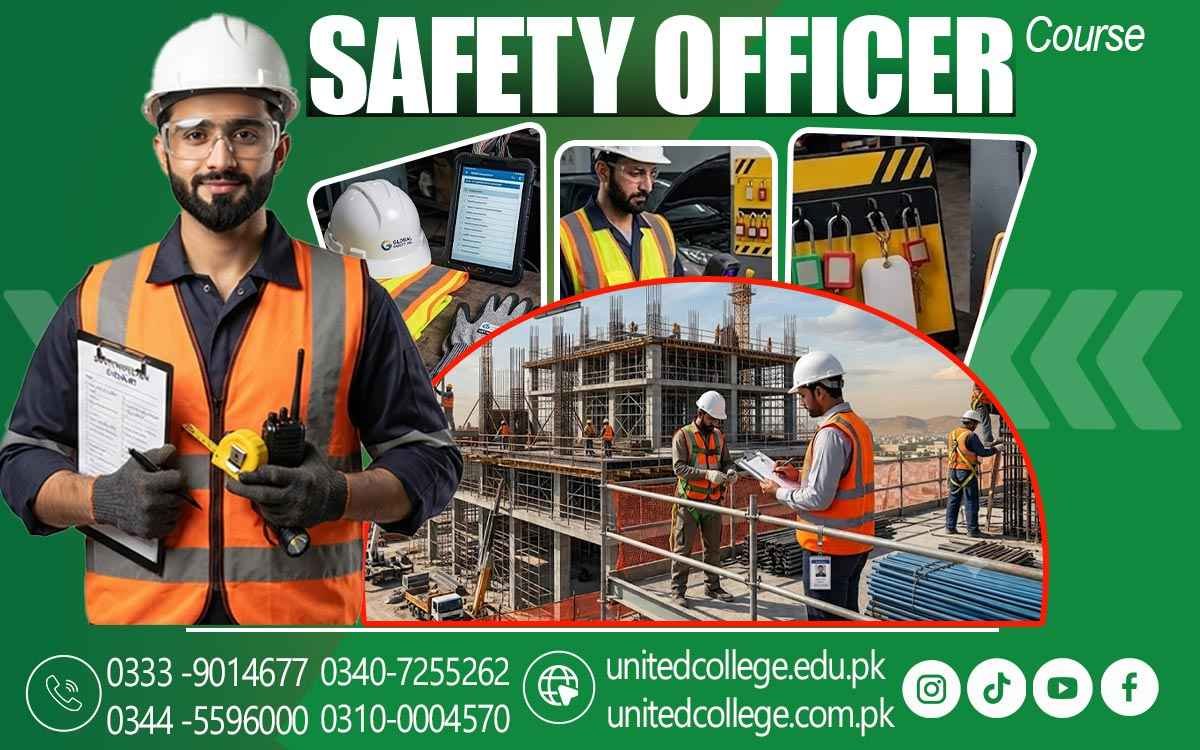

Safety Officer Course in Bannu to Master Safety Procedures
Safety Officer Course in Bannu for Practical Skills in Workplace Protection
A workplace can appear safe at first glance while hiding risks that may affect workers, equipment, and daily operations. An uncovered opening, an overloaded electrical connection, or a poorly planned movement of materials can turn an ordinary task into a dangerous situation. Preventing such problems requires people who understand how to recognize hazards, communicate concerns, and follow suitable safety procedures.
The Safety Officer Course in Bannu introduces learners to essential workplace safety principles and helps them understand how accidents can often be prevented through awareness and preparation. It is suitable for beginners, students, fresh learners, job seekers, and individuals interested in developing practical occupational safety knowledge. Through structured learning, participants can explore how workplace risks are identified, how preventive measures are selected, and why safety responsibilities matter across different industries.
Build Strong Hazard Awareness Through Safety Officer Training in Bannu
Recognizing a hazard is one of the first steps toward preventing workplace accidents. During Safety Officer Training in Bannu, learners can develop an understanding of common dangers, including damaged electrical cables, unstable storage, slippery surfaces, unguarded machinery, and unsafe access routes. These problems may seem minor until someone gets injured or work is interrupted.
Learners can study why hazards should be reported clearly and why corrective action must follow the appropriate workplace procedure. A Workplace Safety Course also introduces the importance of checking surroundings before beginning unfamiliar tasks. Developing this awareness encourages people to look beyond their immediate activity and consider how their actions may affect colleagues working nearby.
Understand Risk Assessment Before Choosing Preventive Measures
Risk assessment gives workers a more organized way to think about workplace dangers. It involves identifying what could cause harm, considering who might be affected, and judging the possible seriousness of an incident. Learners can explore how the findings help determine suitable precautions. For example, if materials must be moved through a busy work area, the workplace may need a clear route, suitable handling equipment, and coordination between workers.
Occupational Health and Safety Training introduces these basic principles so learners understand why safety decisions should be based on actual conditions rather than guesswork. Workplace Risk Management also involves reviewing precautions when work methods, equipment, or surroundings change. A control that worked for one task may not be suitable for another.
Master PPE, Fire Prevention, and Emergency Preparedness
The Safety Officer Course helps learners develop essential knowledge of workplace health and safety practices across construction sites, factories, warehouses, and industrial environments. The course covers important topics such as hazard identification, risk assessment, accident prevention, personal protective equipment (PPE), fire safety, emergency response, and workplace inspections.
These skills help learners understand how to recognize unsafe conditions, follow safety procedures, and contribute to a safer working environment. Through theoretical learning and relevant practical training, participants can build a foundation for understanding workplace hazards, safety regulations, and the responsibilities of safety personnel. Career opportunities depend on the individual's qualifications, practical experience, relevant certifications, and employer requirements.
Turn Inspections and Safety Records Into Useful Workplace Action
A workplace inspection is more than a quick look around a room or worksite. It involves checking conditions systematically to identify problems that may require attention. Depending on the environment, inspections may cover equipment condition, storage arrangements, warning signs, access routes, electrical hazards, and the availability of suitable protective equipment. Safety Inspection and Reporting also includes understanding the value of incident records.
Details about an accident or near miss can help responsible staff examine what happened and identify areas for improvement. Good documentation should be clear, accurate, and based on observed facts. These practices introduce learners to the role of organized reporting in Workplace Hazard Prevention and show how careful records can support more informed decisions about safety procedures.
Connect Safety Knowledge With Machinery, Electricity, and Materials Handling
Many workplace tasks require people to work around equipment or materials that can cause harm when handled incorrectly. Machinery may contain moving parts, hot surfaces, or energy sources that require specific precautions. Electrical work can involve risks from damaged insulation, exposed conductors, or equipment that has not been properly isolated. Materials handling can also create problems when loads are unstable, pathways are crowded, or workers use unsuitable lifting methods.
Construction Safety Training may introduce additional concerns, including falling objects, ladders, temporary structures, and moving vehicles. Learners should also understand the limits of their responsibilities: specialized work may require authorized personnel, appropriate training, and approved procedures.
Explore Work Environments Where Safety Awareness Matters
Safety knowledge is relevant to many settings, although the hazards and responsibilities vary from one workplace to another. Construction projects may need careful coordination around tools, building materials, work at height, and vehicle movement. Manufacturing facilities can involve machinery, production processes, electrical systems, and storage areas.
Maintenance operations also depend on understanding hazards before equipment is inspected or repaired. People who develop Health and Safety Officer Skills may find these areas relevant when exploring further learning or safety-related responsibilities. In Bannu, enrolling in a Safety Officer Course in Bannu can help learners build foundational knowledge of workplace hazards and safety practices.
Choose Safety Training That Matches Your Learning Goals
Before enrolling in safety training, learners should consider what they want to understand and how the course content relates to their goals. Reviewing the topics covered can help them determine whether the training introduces important areas such as risk assessment, fire prevention, PPE, emergency procedures, inspections, and incident reporting. It is also useful to ask about practical learning opportunities, the availability of instructor guidance, and how technical concepts are explained to beginners.
People with little previous experience may benefit from clear examples that connect classroom learning with real workplace situations. The Safety Officer Course in Bannu, offered by United College of Technology, is relevant to individuals interested in building their foundation in workplace safety knowledge. Prospective learners should confirm the current course details directly with the institution instead of relying on assumptions about fees, duration, admission conditions, or certification.
Make Responsible Safety Practices Part of Your Professional Journey
Developing workplace safety knowledge is a process that continues beyond learning basic definitions and procedures. Effective safety awareness involves observing working conditions, recognizing changes, communicating concerns, and following the rules that apply to each task. It also requires knowing when to seek guidance rather than making decisions outside one's authority.
For students, beginners, and job seekers in Bannu, enrolling in a Safety Officer Course in Bannu can offer a starting point for understanding the responsibilities involved in protecting people and supporting organized work practices. Continued learning and relevant practical experience can help strengthen this foundation over time. By developing these qualities, learners can better understand the purpose of workplace protection and the role that careful decisions play in reducing avoidable risks.
Frequently Asked Questions (FAQs)
A safety officer can encourage clear handover procedures so workers understand unfinished tasks, existing hazards, equipment problems, and any precautions that must continue into the next shift.
Good ventilation can help control heat, dust, fumes, and other airborne contaminants. The appropriate ventilation method depends on the materials used and the risks present.
Workers should understand designated pedestrian routes, warning signals, restricted areas, and the importance of keeping a safe distance from moving vehicles.
They can raise awareness of tiredness, encourage workers to report when fatigue affects safe performance, and support appropriate rest and work arrangements under workplace procedures.
Warning labels communicate important information about hazards, handling precautions, and required protection. Understanding them helps workers make safer decisions when using products or equipment.
A review can help identify weaknesses in existing arrangements, clarify responsibilities, and determine whether procedures need improvement to reduce the chance of a similar event.
Admission Open: Start Your Professional Journey Today!
Join United College of Technology and build a career with practical training, recognized certifications, and Gulf job support. Seats are limited.
Apply Now via WhatsAppContact Information
- Address: Rawalpindi: F-272 Main New Katarian Stop, Old IJP Road | Lahore Campus: Lahore, Pakistan
- Phone/WhatsApp: 0340-7255262 / 0333-9014677 / 0301-5044340 / 0310-0004570 / 051-8770756
- Website: unitedcollege.edu.pk
















Leave a Comment