


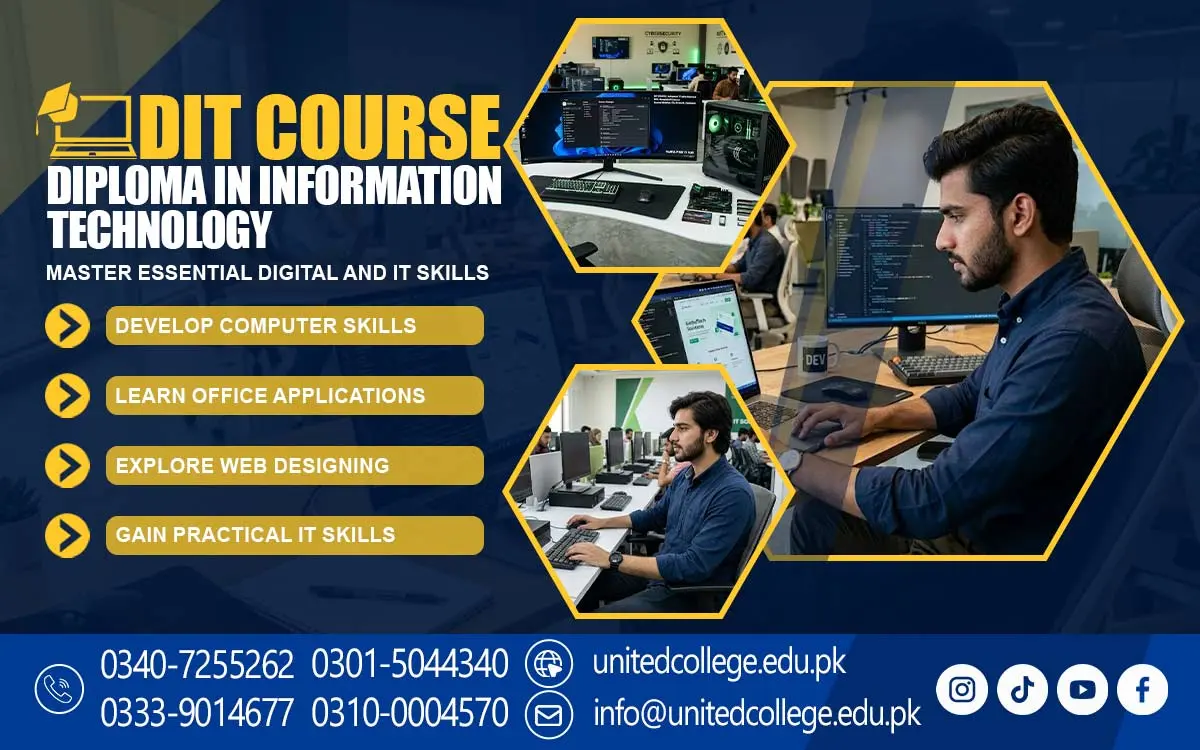

DIT Course in Hangu to Develop Professional IT Skills
DIT Course in Hangu to Master Essential Computer Skills and Prepare for a Digital Future
Computer skills are becoming increasingly important in education, communication, and everyday work. Students use digital tools to prepare assignments, organize information, and explore learning resources, while many work-related tasks require basic computer knowledge. For beginners and job seekers in Hangu, learning how to use computers confidently can be a valuable step towards personal and professional development.
The DIT Course in Hangu provides a learning pathway for people who want to understand information technology and improve their practical computer abilities. Through structured learning and regular practice, students can become more familiar with computer applications, digital documents, and common technology-related tasks. These skills can support further education and help learners prepare for responsibilities that involve computers.
Discover How DIT Learning Builds a Strong Computer Foundation
A Diploma in Information Technology, commonly known as DIT, introduces learners to computer systems, software applications, and basic information technology concepts. It helps students understand how computers process information and how digital tools can be used for different tasks. The subjects covered depend on the course syllabus, so learners should confirm the available modules before enrolling.
The DIT Course in Hangu can be relevant to students who want to strengthen their computer knowledge and people who are preparing for further studies. It may also suit learners who have limited experience with computers and want to improve their digital confidence. A clear understanding of the basics gives learners a useful starting point for exploring more advanced IT subjects later.
Explore Computer Applications That Make Daily Tasks Easier
Computer applications help people create documents, organize information, communicate, and present ideas. Depending on the syllabus, DIT learning may introduce students to word processing, spreadsheets, presentations, internet browsing, email communication, and other basic IT topics. MS Excel can help users arrange information in rows and columns, perform basic calculations, and maintain simple records.
MS PowerPoint allows learners to organize ideas into slides for classroom presentations or workplace discussions. Students may also learn how to use an operating system, create folders, save files, and locate documents when needed. Understanding these functions can reduce confusion when working with digital information.
Turn Computer Lessons into Practical Everyday Skills
Practical learning helps students connect computer knowledge with real activities. For example, a learner can practise typing a formal letter, arranging a report with clear headings, or preparing a spreadsheet to organize information. These exercises make software functions easier to understand because students can see how each tool works.
During DIT Training in Hangu, regular practice can help learners improve their accuracy and confidence. Saving a document in the correct folder, changing its file name, and finding it again later are simple activities that teach useful habits. Similarly, creating a presentation can help students learn how to arrange information in a logical order and make it easier for others to understand.
Give Students in Hangu Better Ways to Manage Their Studies
Computer knowledge can support students throughout their educational journey. They may need to type assignments, prepare presentations, search for reliable information, or organize notes for revision. Understanding common computer functions can make these activities more manageable and help students present their work clearly.
For learners in Hangu, Information Technology Education can also provide a foundation for continued learning. Students who develop basic digital skills may feel more comfortable exploring online educational materials, learning new software, and completing computer-based tasks. Those who have mostly used mobile phones can gradually become familiar with laptops and desktop computers.
Connect Basic IT Skills with Office and Professional Responsibilities
Many office-related tasks involve preparing documents, organizing records, entering information, and communicating through digital tools. A person with basic computer knowledge may find it easier to understand these responsibilities and learn the software used in a particular workplace.
A Computer Course in Hangu can help learners develop a foundation for these activities, but the requirements of each role are different. Some positions may require advanced software knowledge, specialized training, or previous experience. Completing a DIT course does not guarantee employment or a particular income. Learners should treat computer education as one part of their development and continue improving the skills relevant to their goals.
Learn with United College of Technology and Set Clear Goals
The DIT course is offered by United College of Technology, providing learners with an option to explore structured computer education. Before making an enrollment decision, students should confirm the current course syllabus and other details directly with the institution. This helps them understand which subjects are taught and whether the course matches their learning needs.
Choosing a course becomes easier when learners have a clear purpose. Someone who wants to improve academic work may focus on document preparation, presentations, and online research. A learner interested in office responsibilities may want to develop stronger skills in spreadsheets, file organization, and email communication. Those interested in technical subjects can explore further IT training after building a solid foundation.
Strengthen Your Progress Through Revision and Regular Practice
Learning computer skills requires consistency. Students can improve their understanding by revising previous lessons, repeating practical activities, and setting small targets for each study session. For example, they might practise typing one day, prepare a document the next, and work on organizing spreadsheet information later.
It is equally important to develop safe and responsible digital habits. Learners should protect their passwords, avoid suspicious links, keep important files organized, and check online information before trusting it. These practices help them use technology more carefully and understand that digital knowledge includes more than operating software.
Take a Confident Step Towards a More Digital Future
The DIT Course in Hangu can be a useful starting point for learners who want to improve their computer knowledge and develop practical IT skills. From preparing academic documents to understanding office applications, computer education can support many everyday responsibilities. It can also help students discover areas of technology they may want to explore in greater depth.
Learners should review course information carefully, set realistic goals, and keep working to strengthen their abilities. For students, beginners, and job seekers in Hangu, taking computer education seriously can be a positive step towards greater digital confidence. By learning the basics, practising regularly, and remaining open to new knowledge, they can create a stronger foundation for further education and future opportunities.
Frequently Asked Questions (FAQs)
Data refers to raw facts, while information is data arranged or processed to make it meaningful. Understanding this difference helps learners see how computers organize useful content.
Effective searching helps learners find relevant resources more quickly by choosing clear keywords, checking results, and avoiding unreliable websites.
Basic IT knowledge can help learners share files, exchange feedback, and collaborate on documents using suitable digital tools when these are available.
Understanding storage devices helps learners recognize where digital information can be saved and how files may be transferred between compatible devices.
Students can set one specific goal per session, complete a short task independently, and review what they learned before moving to another topic.
Copyright awareness helps learners respect creators' work, identify material they can use appropriately, and provide credit when required.
Admission Open: Start Your Professional Journey Today!
Join United College of Technology and build a career with practical training, recognized certifications, and Gulf job support. Seats are limited.
Apply Now via WhatsAppContact Information
- Address: Rawalpindi: F-272 Main New Katarian Stop, Old IJP Road | Lahore Campus: Lahore, Pakistan
- Phone/WhatsApp: 0340-7255262 / 0333-9014677 / 0301-5044340 / 0310-0004570 / 051-8770756
- Website: unitedcollege.edu.pk
















Leave a Comment